In moments of change, credibility—not control—is what sustains leadership.
In my experience as a school leader, I’ve come to see that credibility doesn’t come from bold declarations or polished presentations. It grows—quietly and steadily—in the space between daily presence and intentional leadership.
It begins with:
☕ Small, unplanned conversations
👋 Daily greetings and recognition
📘 Decisions grounded in expertise and relational trust
🎯 The humility to listen before leading
Credibility is also deeply cultural. It’s not just about what you know—it’s about what you’re willing to learn from your team. Leadership that earns trust shows awareness of context, respect for those already doing the work, and the willingness to walk alongside—not above.
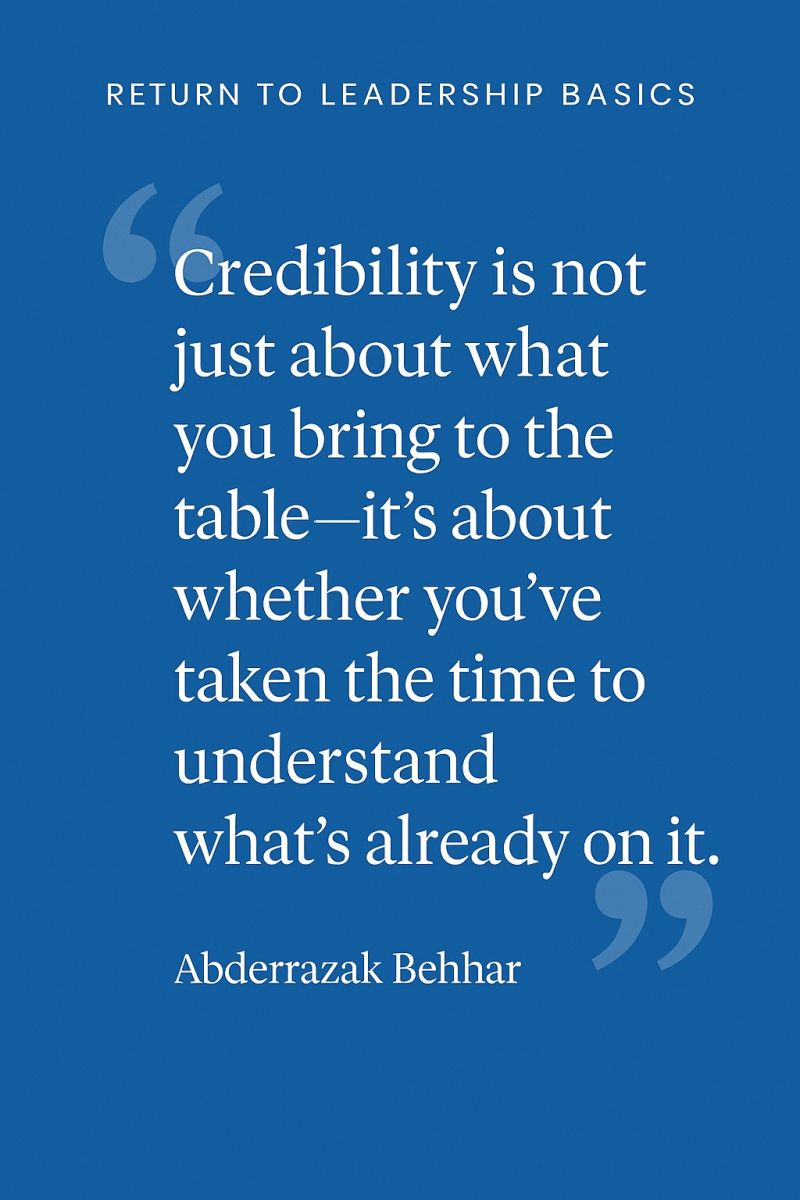
“Credibility is not just about what you bring to the table—it’s about whether you’ve taken the time to understand what’s already on it.”
True credibility in times of change means that your team believes you can guide the transition—not by enforcing it, but by anchoring it in clarity, care, and trust.
Because change is not a disruption—it’s a responsibility.
And leadership is not a performance—it’s a presence.
hashtag#ReturnToLeadershipBasics hashtag#SchoolLeadership hashtag#CredibilityInAction hashtag#InstructionalLeadership hashtag#TrustInLeadership hashtag#AbderrazakBehhar
 Abderrazak Behhar