Leadership is not only about speaking with clarity—it is equally about listening with intent. Listening is not simply waiting for our turn to respond, but creating space where others feel truly heard.
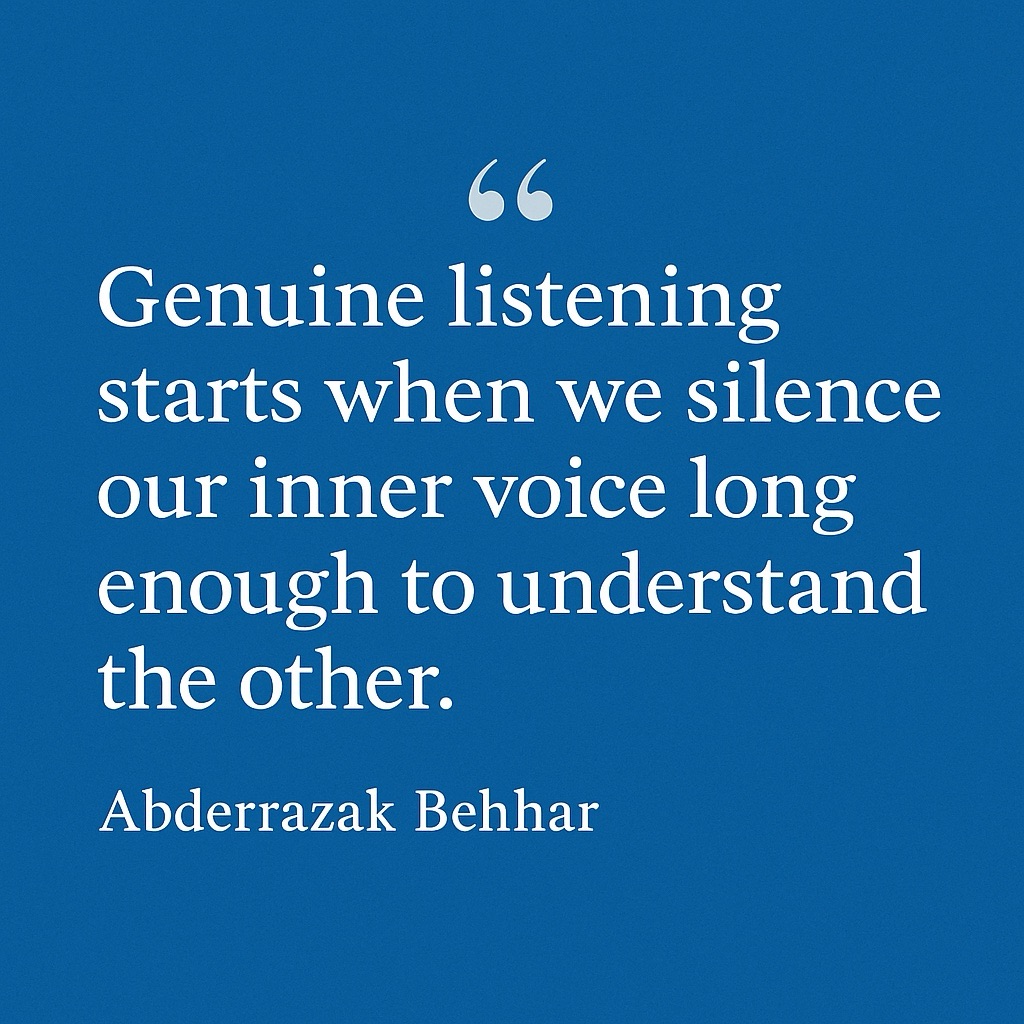
“Genuine listening starts when we silence our inner voice long enough to understand the other.”
When we listen authentically, we don’t just exchange information. We build trust, uncover hidden potential, and often find new paths forward.
Great listening reminds us that:
Every team member matters. Insight can come from any voice in the organization. A simple idea might redirect focus or open new opportunities. What seems small at first can become transformative. Potential is discovered when space is given. Listening reveals strengths and perspectives we might otherwise overlook.
Listening Enriches Leadership
Some of the most meaningful shifts in my leadership journey have come through listening:
A colleague once suggested: “Why not assign some PD sessions to external consultants?” That idea helped me see how external expertise could complement internal growth. During curriculum planning, a teacher encouraged simplifying rubrics. That reminder—that clarity is more valuable than complexity—helped refine our assessment approach. In accreditation work, thoughtful feedback on workload distribution led to fairer adjustments, boosting morale and improving the process.
Each of these moments showed me that leadership grows wiser when it listens.
When Listening Becomes Culture
When listening is part of the culture, something powerful happens:
People feel valued and respected Creativity and initiative thrive Communication becomes honest and constructive The whole organization moves forward together
Listening is not just a leadership skill—it’s the foundation of collaboration and trust.
#ReturnToLeadershipBasics #SchoolLeadership #PowerOfListening #CollaborativeLeadership #AbderrazakBehhar
Would you like me to now create a blue quote visual with your signature line:
“Genuine listening starts when we silence our inner voice long enough to understand the other.”

 Abderrazak Behhar