🧭 Return to Leadership Basics – Post 1: What Makes a School Leader Credible in Times of Change?


In moments of change, credibility—not control—is what sustains leadership.

In my experience as a school leader, I’ve come to see that credibility doesn’t come from bold declarations or polished presentations. It grows—quietly and steadily—in the space between daily presence and intentional leadership.

It begins with:
☕ Small, unplanned conversations
👋 Daily greetings and recognition
📘 Decisions grounded in expertise and relational trust
🎯 The humility to listen before leading

Credibility is also deeply cultural. It’s not just about what you know—it’s about what you’re willing to learn from your team. Leadership that earns trust shows awareness of context, respect for those already doing the work, and the willingness to walk alongside—not above.

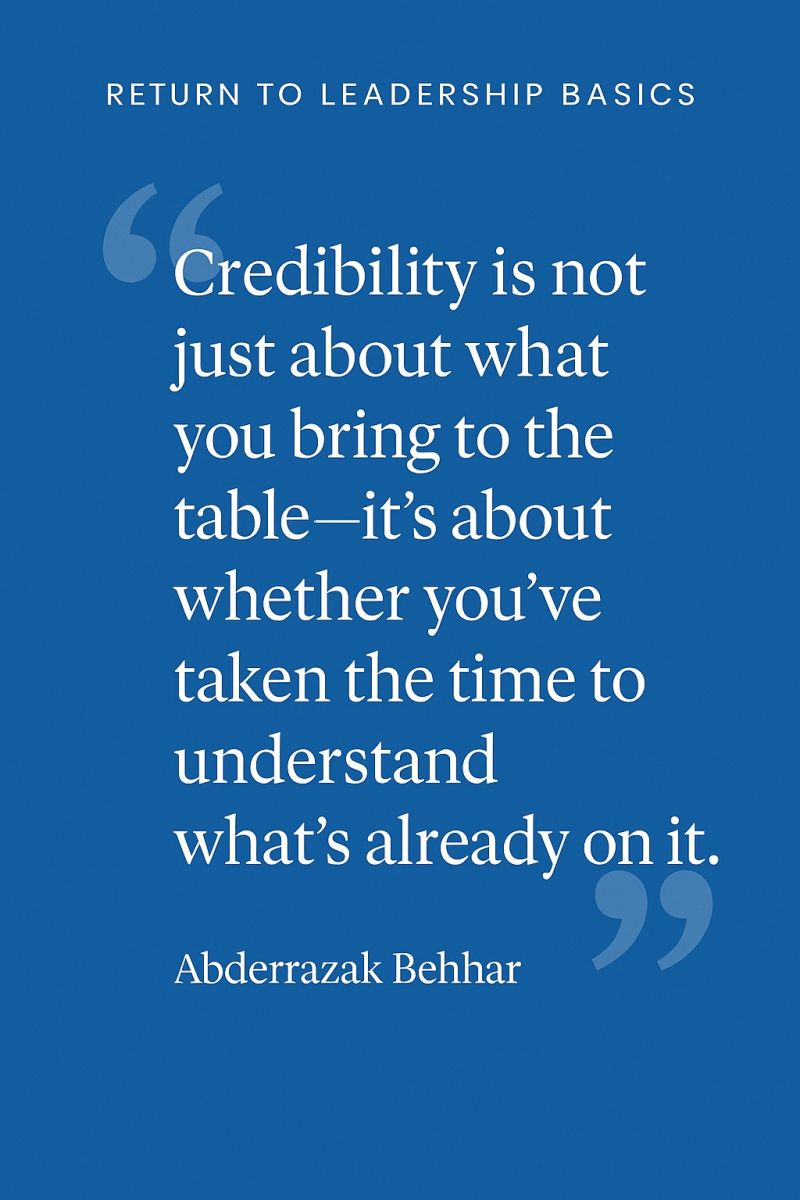
“Credibility is not just about what you bring to the table—it’s about whether you’ve taken the time to understand what’s already on it.”

True credibility in times of change means that your team believes you can guide the transition—not by enforcing it, but by anchoring it in clarity, care, and trust.
Because change is not a disruption—it’s a responsibility.
And leadership is not a performance—it’s a presence.

hashtag#ReturnToLeadershipBasics hashtag#SchoolLeadership hashtag#CredibilityInAction hashtag#InstructionalLeadership hashtag#TrustInLeadership hashtag#AbderrazakBehhar
Return to Basics | Post #8: The Goldilocks Principle in Learning: Why Challenge Matters


What drives student growth?
Not just content. Not just effort.
Challenge—just the right kind.

When goals are too easy, students get bored.
When goals are too hard, they disengage.
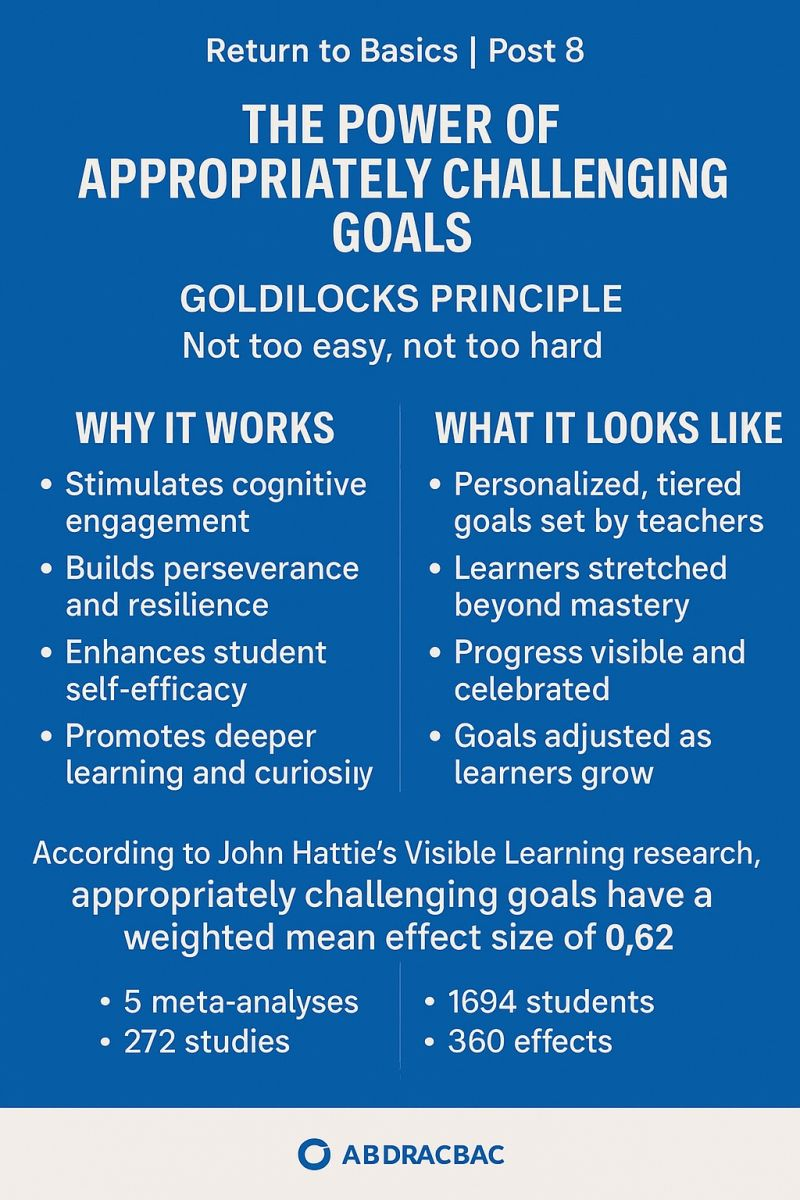
But when goals are appropriately challenging—not too easy, not too hard—students enter the zone of optimal learning.

This is what John Hattie refers to as the Goldilocks principle of goal-setting.

According to Hattie’s Visible Learning research, appropriately challenging goals yield a weighted mean effect size of 0.62, based on:
• 5 meta-analyses
• 272 studies
• 16,694 students
• 360 measured effects

✅ Why it works:
• Stimulates cognitive engagement
• Builds perseverance and resilience
• Enhances student self-efficacy
• Promotes deeper learning and curiosity

✅ What it looks like in practice:
• Teachers set personalized, tiered goals for students
• Learners are stretched slightly beyond current mastery
• Progress is visible and celebrated
• Goals are adjusted as learners grow

This is not about lowering standards or pushing too hard.
It’s about hitting that just-right challenge level—where students feel the stretch but also see the path forward.

How do you calibrate challenge for your learners?

hashtag#ReturnToBasics hashtag#GoalSetting hashtag#ChallengingGoals hashtag#VisibleLearning hashtag#JohnHattie hashtag#StudentGrowth hashtag#InstructionalLeadership hashtag#AbderrazakBehhar