🧭 Return to Leadership Basics – Post 4
Leadership is Seen, Felt, and Heard
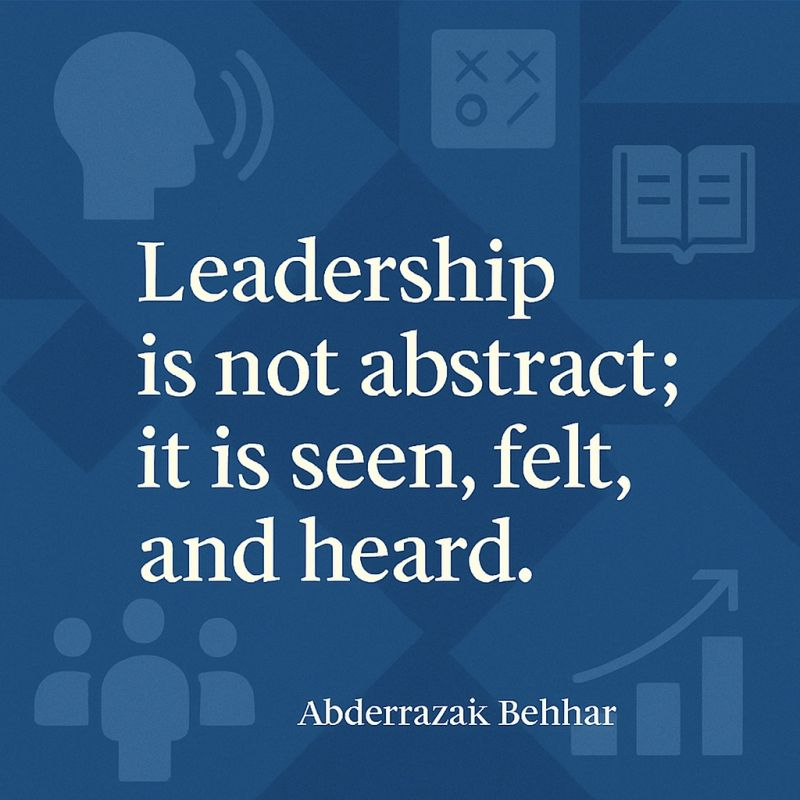
“Leadership is not abstract; it is seen, felt, and heard.”
Leadership that makes a difference doesn’t live in a mission statement—it lives in daily actions, presence, and words. When leadership is visible, experienced, and voiced with purpose, it becomes a force that shapes culture and inspires change.
1. Leadership is Seen
Too often, leaders are accused of living in their ivory tower—distant from the realities of classrooms. This distance creates doubt and resistance, especially when top-down changes arrive without visible engagement.
Effective leaders show up:
• In classrooms – not only to evaluate, but to celebrate and understand.
• In team meetings – to listen before deciding.
• In social events – to connect as people, not just as positions.
Visibility sends a message: I am here with you, not above you. And when leadership is seen, change feels collaborative, not imposed.
2. Leadership is Felt
Leaders are remembered for how they make people feel. A leader’s presence should be felt in the culture of trust, support, and belonging they create.
Empathy in action:
• Meeting privately with a struggling teacher to understand their challenges before offering solutions.
• Acknowledging collective fatigue and asking, “What can I do to make next week better?”
Care in action:
• Publicly congratulating a staff member on a personal milestone.
• Visiting a classroom simply to say, “Your students loved your last project—well done.”
When leadership is felt, people are more willing to take risks, speak honestly, and contribute beyond their job description.
3. Leadership is Heard
A leader’s communication is the mirror of their values and beliefs. Every message should be intentional and aligned with the organization’s ideals.
Effective leaders use language that:
• Speaks to the mission and vision, keeping the school’s purpose front and center.
• Strengthens collective efficacy, reminding the team of their shared ability to achieve big goals.
• Explains the “why”, ensuring people see the meaning behind each decision.
When leadership is heard this way, communication doesn’t just inform—it inspires and unites.
⸻
Leadership is not a concept to be studied from afar.
It is seen in presence, felt in relationships, and heard in purposeful communication.
And when all three are present, leadership stops being a position—and becomes a culture.
hashtag#ReturnToLeadershipBasics hashtag#SchoolLeadership hashtag#VisibleLeadership hashtag#RelationalLeadership hashtag#AbderrazakBehhar
 Abderrazak Behhar