🧭 Return to Leadership Basics – Post 6: The Power of Listening: Building Together Through Dialogue

Leadership is not only about speaking with clarity—it is equally about listening with intent. Listening is not simply waiting for our turn to respond, but creating space where others feel truly heard.

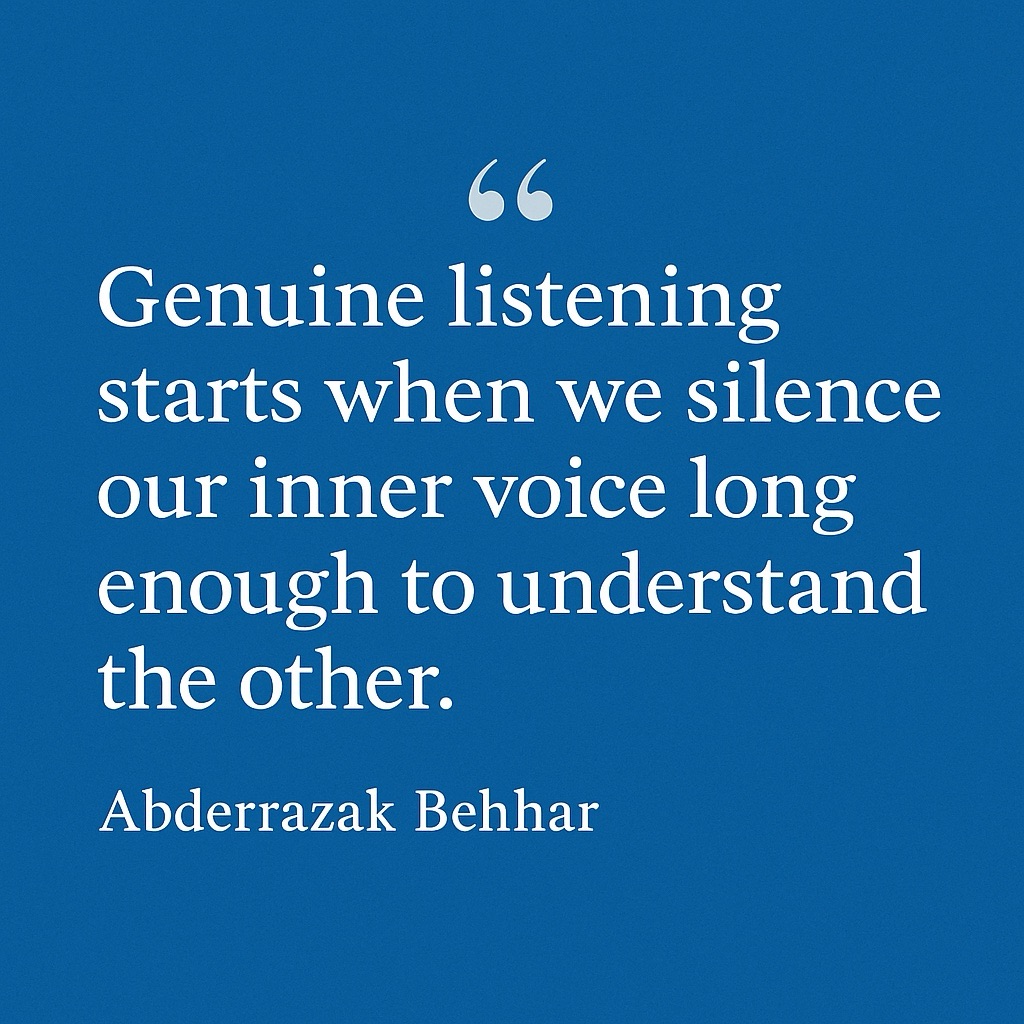
“Genuine listening starts when we silence our inner voice long enough to understand the other.”

When we listen authentically, we don’t just exchange information. We build trust, uncover hidden potential, and often find new paths forward.

Great listening reminds us that:

Every team member matters. Insight can come from any voice in the organization. A simple idea might redirect focus or open new opportunities. What seems small at first can become transformative. Potential is discovered when space is given. Listening reveals strengths and perspectives we might otherwise overlook.

Listening Enriches Leadership

Some of the most meaningful shifts in my leadership journey have come through listening:

A colleague once suggested: “Why not assign some PD sessions to external consultants?” That idea helped me see how external expertise could complement internal growth. During curriculum planning, a teacher encouraged simplifying rubrics. That reminder—that clarity is more valuable than complexity—helped refine our assessment approach. In accreditation work, thoughtful feedback on workload distribution led to fairer adjustments, boosting morale and improving the process.

Each of these moments showed me that leadership grows wiser when it listens.

When Listening Becomes Culture

When listening is part of the culture, something powerful happens:

People feel valued and respected Creativity and initiative thrive Communication becomes honest and constructive The whole organization moves forward together

Listening is not just a leadership skill—it’s the foundation of collaboration and trust.

#ReturnToLeadershipBasics #SchoolLeadership #PowerOfListening #CollaborativeLeadership #AbderrazakBehhar

Would you like me to now create a blue quote visual with your signature line:

“Genuine listening starts when we silence our inner voice long enough to understand the other.”
🧭 Return to Leadership Basics – Post 5: The Courage to Decide: Why Leadership Is Not About Comfort


Leadership is not tested in the easy choices, but in the tough ones. Committees and collaboration matter, but at some point all eyes turn to the leader. And no process will spare you from deciding.
• Restructuring roles may upset comfort zones, but clarity demands it.
• Phasing out outdated programs may hurt pride, but alignment demands it.
• Confronting underperformance may feel uncomfortable, but integrity demands it.
• Saying no to attractive distractions may disappoint some, but vision demands it.

Unpopular? Often.
Necessary? Always.

The “magic rule” is simple: anchor tough decisions in mission, values, and data.
That’s how you transform resistance into credibility, and discomfort into trust.

Avoiding tough decisions for fear of being unpopular is far riskier. You can drift for a while, but when the storm comes, hesitation will sink you faster than any unpopular choice.

⸝

“Leadership is not about doing what is easy; leadership is about doing what is right.”

⸝

hashtag#ReturnToLeadershipBasics hashtag#CourageInLeadership hashtag#DecisionMaking hashtag#SchoolLeadership hashtag#AbderrazakBehhar

🧭 Return to Leadership Basics – Post 4: Leadership is Seen, Felt, and Heard

🧭 Return to Leadership Basics – Post 4
Leadership is Seen, Felt, and Heard

“Leadership is not abstract; it is seen, felt, and heard.”

Leadership that makes a difference doesn’t live in a mission statement—it lives in daily actions, presence, and words. When leadership is visible, experienced, and voiced with purpose, it becomes a force that shapes culture and inspires change.


1. Leadership is Seen

Too often, leaders are accused of living in their ivory tower—distant from the realities of classrooms. This distance creates doubt and resistance, especially when top-down changes arrive without visible engagement.

Effective leaders show up:
• In classrooms – not only to evaluate, but to celebrate and understand.
• In team meetings – to listen before deciding.
• In social events – to connect as people, not just as positions.

Visibility sends a message: I am here with you, not above you. And when leadership is seen, change feels collaborative, not imposed.


2. Leadership is Felt

Leaders are remembered for how they make people feel. A leader’s presence should be felt in the culture of trust, support, and belonging they create.

Empathy in action:
• Meeting privately with a struggling teacher to understand their challenges before offering solutions.
• Acknowledging collective fatigue and asking, “What can I do to make next week better?”

Care in action:
• Publicly congratulating a staff member on a personal milestone.
• Visiting a classroom simply to say, “Your students loved your last project—well done.”

When leadership is felt, people are more willing to take risks, speak honestly, and contribute beyond their job description.


3. Leadership is Heard

A leader’s communication is the mirror of their values and beliefs. Every message should be intentional and aligned with the organization’s ideals.

Effective leaders use language that:
• Speaks to the mission and vision, keeping the school’s purpose front and center.
• Strengthens collective efficacy, reminding the team of their shared ability to achieve big goals.
• Explains the “why”, ensuring people see the meaning behind each decision.

When leadership is heard this way, communication doesn’t just inform—it inspires and unites.

⸝

Leadership is not a concept to be studied from afar.
It is seen in presence, felt in relationships, and heard in purposeful communication.
And when all three are present, leadership stops being a position—and becomes a culture.

hashtag#ReturnToLeadershipBasics hashtag#SchoolLeadership hashtag#VisibleLeadership hashtag#RelationalLeadership hashtag#AbderrazakBehhar

🧭 Return to Leadership Basics – Post 2: How School Leaders Build Trust Without Micromanaging


Leadership is not about control—it’s about trusting others with responsibility.
But for many leaders, especially during times of change, that’s easier said than done.

Here’s what I’ve learned:

“Micromanagement kills the soul of leadership.
Leadership is about empowering; micromanagement is all about controlling.”

True empowerment happens when your team sees the vision, feels the ownership, and believes their voice matters.

Yes—during moments of instability or transition, leaders may need to step in more actively. But sustainable leadership is about building teams that lead with you, not wait for you.

Strong leadership doesn’t mean doing it all yourself.
It means creating a space where others grow into leadership, step by step.

Because when you genuinely trust your team:
🔹 Leadership is no longer positional
🔹 It becomes distributed
🔹 It flows from the dynamics of the group, not the directives of a single person

And that’s when real change becomes possible.

hashtag#ReturnToLeadershipBasics hashtag#EmpoweringLeadership hashtag#SchoolLeadership hashtag#DistributedLeadership hashtag#TrustAndAutonomy hashtag#AbderrazakBehhar

🧭 Return to Leadership Basics – Post 1: What Makes a School Leader Credible in Times of Change?


In moments of change, credibility—not control—is what sustains leadership.

In my experience as a school leader, I’ve come to see that credibility doesn’t come from bold declarations or polished presentations. It grows—quietly and steadily—in the space between daily presence and intentional leadership.

It begins with:
☕ Small, unplanned conversations
👋 Daily greetings and recognition
📘 Decisions grounded in expertise and relational trust
🎯 The humility to listen before leading

Credibility is also deeply cultural. It’s not just about what you know—it’s about what you’re willing to learn from your team. Leadership that earns trust shows awareness of context, respect for those already doing the work, and the willingness to walk alongside—not above.

“Credibility is not just about what you bring to the table—it’s about whether you’ve taken the time to understand what’s already on it.”

True credibility in times of change means that your team believes you can guide the transition—not by enforcing it, but by anchoring it in clarity, care, and trust.
Because change is not a disruption—it’s a responsibility.
And leadership is not a performance—it’s a presence.

hashtag#ReturnToLeadershipBasics hashtag#SchoolLeadership hashtag#CredibilityInAction hashtag#InstructionalLeadership hashtag#TrustInLeadership hashtag#AbderrazakBehhar