If you’re following the conversation around the Science of Reading, one message is loud and clear:
Systematic phonics instruction isn’t optional—it’s foundational.
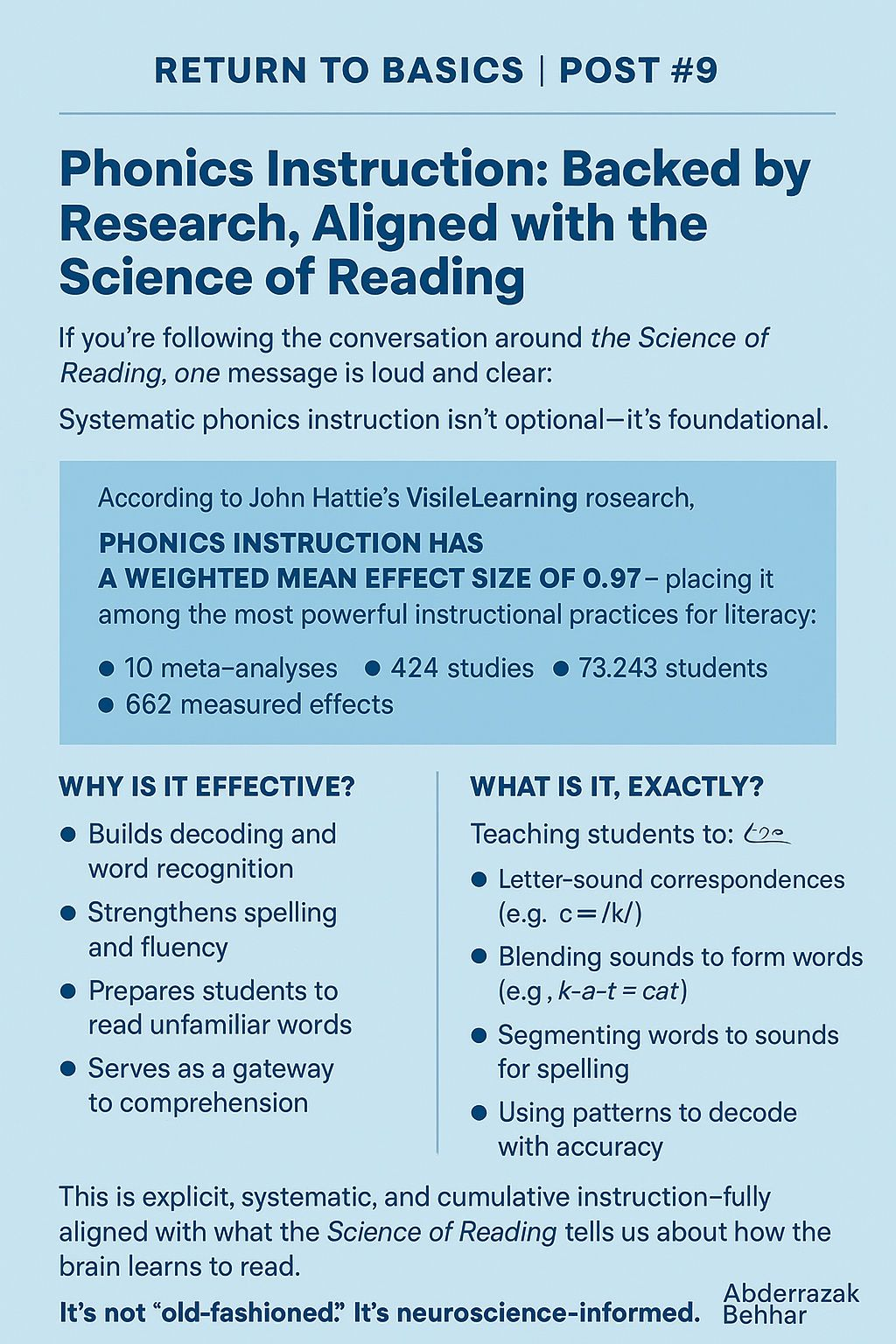
According to John Hattie’s Visible Learning research, phonics instruction has a weighted mean effect size of 0.97—placing it among the most powerful instructional practices for literacy.
This is backed by
• 10 meta-analyses
• 424 studies
• 73,243 students
• 662 measured effects
✅ Why is it effective?
Phonics instruction:
• Builds decoding and word recognition
• Strengthens spelling and fluency
• Prepares students to read unfamiliar words
• Serves as a gateway to comprehension
✅ What is it, exactly?
Phonics instruction teaches students:
• Letter-sound correspondences (e.g., c = /k/)
• Blending sounds to form words (e.g., k-a-t = cat)
• Segmenting words into sounds for spelling
• Using patterns to decode with accuracy
This is explicit, systematic, and cumulative instruction—fully aligned with what the Science of Reading tells us about how the brain learns to read.
It’s not “old-fashioned.” It’s neuroscience-informed.
As we move forward in literacy reform, let’s stay grounded in what works.
How is your school approaching phonics in light of the new science of reading?
hashtag#ReturnToBasics hashtag#PhonicsInstruction hashtag#ScienceOfReading hashtag#LiteracyMatters hashtag#EarlyLiteracy hashtag#JohnHattie hashtag#VisibleLearning hashtag#ReadingInstruction hashtag#AbderrazakBehhar
 Abderrazak Behhar