Trust doesn’t begin in a meeting—it begins in the culture we create.
Over the years, I’ve learned that trust is not just an emotional state. It’s the product of how we lead, how we communicate, and how we involve others in shaping the path forward.
Here’s what cultivating trust daily looks like:
🔹 Include those impacted by decisions
Trust deepens when team members are invited to participate in making, implementing, and owning key decisions.
🔹 Ensure fair and respectful communication
When everyone feels heard, valued, and safe to speak up, trust thrives.
🔹 Establish clear communication channels
Lack of clarity breeds confusion—and confusion opens the door to mistrust.
🔹 Design systems that allow flexibility
Rigid procedures choke trust. Trust lives in systems where professional judgment, creativity, and human complexity are respected.
⸻
But what happens when trust breaks?
Not all broken trust is the same.
Some breaches need to be addressed openly.
Others require quiet mediation.
Often, rebuilding trust requires patience and clear expectations, along with a shared willingness to move forward.
And how do you know when trust is eroding?
The signs are rarely loud, but always telling:
• Rumors replace open dialogue
• Promises are broken or forgotten
• Criticism is avoided or punished
• Compliance replaces initiative
• Decisions flow top-down
• Communication becomes selective and unclear
As I’ve come to observe:
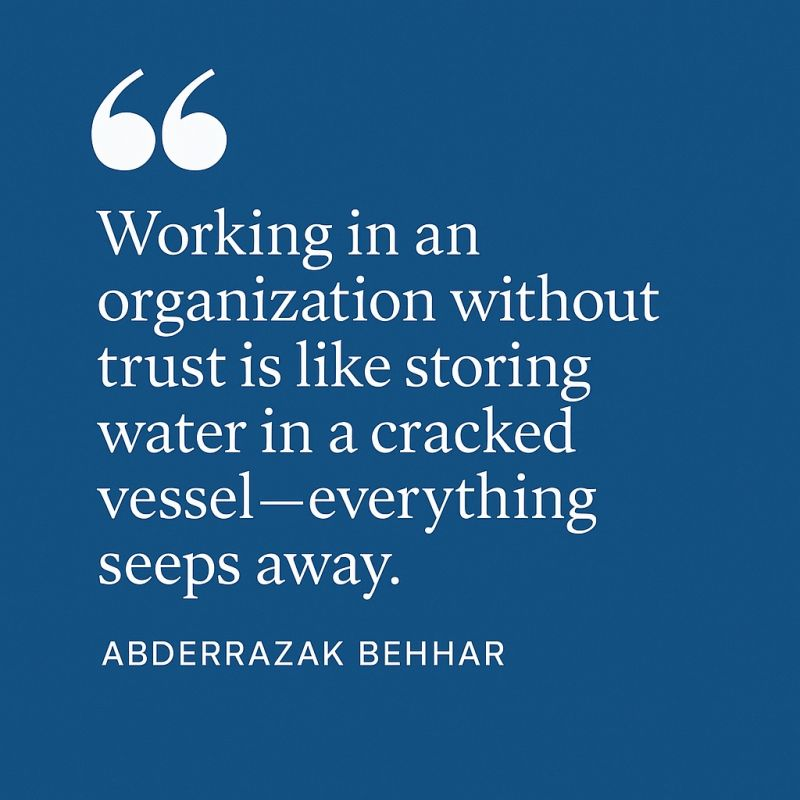
“Working in an organization without trust is like storing water in a cracked vessel—everything seeps away.”
And perhaps just as true:
“Trust reveals itself not in how people comply—but in how they contribute.”
Because in healthy schools, trust is not just felt—it’s practiced. And in every corner of the organization, it multiplies.
⸻
hashtag#ReturnToLeadershipBasics hashtag#TrustInLeadership hashtag#SchoolCulture hashtag#EmpoweredTeams hashtag#RelationalLeadership hashtag#AbderrazakBehhar
 Abderrazak Behhar